

Tea, an ancient beverage steeped in tradition and cultural significance, holds a prominent place in the history of many societies around the world. From its origins in ancient China to its widespread cultivation and consumption today, tea has played a central role in social, ceremonial, and economic aspects of various cultures. In this blog post, we will explore the rich history and cultural significance of tea, examining its evolution and impact on different civilizations throughout the ages. From the elaborate tea ceremonies of Japan to the afternoon tradition of high tea in England, we will learn more about this beloved beverage’s fascinating global influence. Let’s take a short trip through time and around the world as we uncover the deep-rooted history and cultural importance of tea.
Tea in the East: Traditions and Rituals
For centuries, tea has held a significant place in the cultures of Eastern countries such as China, Japan, and India. The traditions and rituals surrounding the consumption of tea in these regions are deeply rooted in their history and have become an integral part of their cultural identity.
China: The Birthplace of Tea Culture
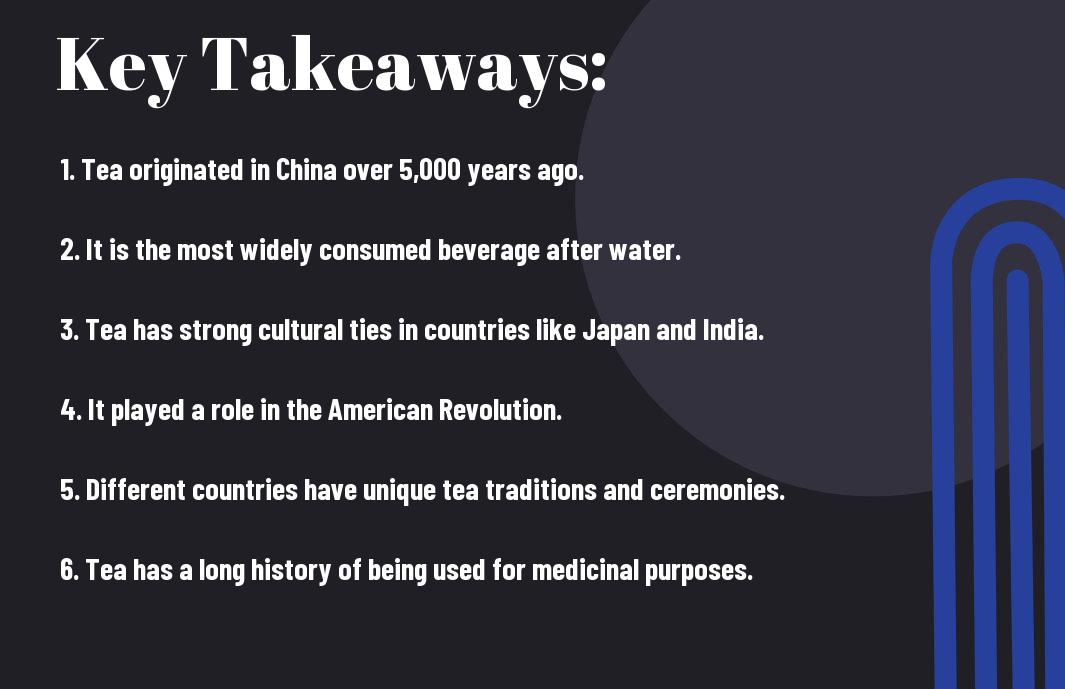
For over 5,000 years, the Chinese have been cultivating and consuming tea, making it the birthplace of tea culture. In China, tea is not just a beverage but a symbol of hospitality, respect, and harmony. The traditional Chinese tea ceremony, known as Gongfu Cha, is a highly ritualized practice that embodies the harmony between nature, human life, and spiritual fulfillment.
Tea plays a central role in many Chinese social customs and ceremonies, and it is often used to show respect to guests, celebrate special occasions, and express gratitude. The variety of teas produced in China, each with its unique flavors and aromas, reflects the diverse cultural and geographical landscape of the country.
Japan: The Way of Tea and its Ceremonies
For the Japanese, the consumption of tea has evolved into a deeply spiritual and meditative practice known as the Way of Tea, or Cha-no-yu. This traditional Japanese tea ceremony encompasses a series of highly choreographed movements and rituals that promote harmony, respect, purity, and tranquility.
The preparation and serving of matcha, a finely ground powdered green tea, is at the heart of the Japanese tea ceremony. The precise and deliberate movements involved in this ritual are intended to create a moment of mindfulness and connection between the host and the guests, fostering a sense of calm and contemplation.
Eastern tea traditions emphasize the importance of mindfulness, hospitality, and respect in the consumption of tea. Whether it’s the refined and elegant traditions of China, the spiritual and meditative rituals of Japan, or the communal and flavorful chai culture of India, tea holds a special place in the hearts of the people in the East, shaping their social interactions and cultural expressions.
India: Chai and its Regional Variations
An integral part of everyday life in India, chai holds a special place in the country’s social fabric. The preparation and consumption of chai vary from region to region, each with its unique blend of spices and flavors that reflect the local culture and traditions.
In India, chai is more than just a beverage, it is a symbol of connection, hospitality, and warmth. Whether shared with family and friends at home or savored at local roadside stalls, chai plays a central role in bringing people together and fostering a sense of community.
Tea in the West: Adoption and Adaptation
Even as tea’s consumption continued to grow in the East, it eventually made its way to the Western world. To learn more about the fascinating tales and traditions surrounding tea in different regions around the world, check out Tales of Tea Around The World: Fascinating Traditions and …
Europe: Tea as a Social Lubricant
The consumption of tea in Europe began in the early 17th century, primarily in the aristocratic and royal circles. Over time, it became more widespread and played a significant role in social interactions. Tea became a symbol of wealth and sophistication, with tea parties and afternoon tea becoming popular social events among the elite.
In England, tea consumption became a part of everyday life for people from all social classes. The introduction of teahouses and the tradition of afternoon tea further solidified the cultural significance of tea in Europe.
America: The Boston Tea Party and Beyond
Adoption of tea in America began in the 18th century, but it was met with resistance, most notably during the Boston Tea Party—an event that marked a pivotal moment in America’s fight for independence from British rule. Despite the initial turmoil, the popularity of tea continued to grow in America, and it eventually became a beverage enjoyed by people from all walks of life.
The West was quick to adapt and incorporate tea into its own cultural traditions, including the creation of unique tea blends and the rise of tea ceremonies among different communities.
The Tea Industry: Growth and Challenges
To truly understand the cultural significance of tea around the world, it is important to examine the growth and challenges facing the tea industry. From cultivation and harvesting to trade, economics, and sustainability, the tea industry has a rich history and a complex present-day landscape.
Cultivation and Harvesting
Industry professionals and enthusiasts alike recognize the meticulous process of tea cultivation and harvesting. From carefully tending to the tea plants in ideal climates to hand-picking the delicate leaves, every step is essential to producing the highest quality tea. This process is not only a vital part of the industry, but it also plays a significant role in the cultural traditions and heritage of tea-growing regions.
Trade, Economics, and Sustainability
With the globalization of the tea industry, trade, economics, and sustainability have become increasingly important factors to consider. The demand for high-quality tea has shaped trade relationships between producing and consuming countries, while economic factors influence pricing and market competition. At the same time, sustainability is a growing concern, with a focus on ethical sourcing, environmental impact, and fair labor practices.
Cultivation and harvesting practices directly impact the trade, economics, and sustainability of the tea industry. As consumer awareness grows, so too does the demand for responsibly sourced and produced tea, prompting industry stakeholders to address these crucial issues in innovative ways.
Cultural Innovations in Tea Consumption
After its discovery in China, tea quickly spread across the world, leading to a variety of cultural innovations in its consumption. Different countries have developed their unique tea ceremonies and traditions, each with its own distinct rituals and significance. For example, in Japan, the tea ceremony, or “Chanoyu,” places a strong emphasis on aesthetics and mindfulness, reflecting the ancient Japanese philosophy of Wabi-sabi. In Morocco, the traditional preparation of mint tea is not just a beverage but a symbol of hospitality and friendship, often served in elaborate tea sets to guests.
Tea and Health: Ancient Remedies and Modern Science
To this day, tea is renowned for its health benefits, a tradition that dates back millennia. In ancient China, tea was initially used as a medicinal drink and became an essential part of traditional Chinese medicine. Today, modern science has confirmed many of these ancient beliefs, demonstrating that tea may help reduce the risk of heart disease, lower cholesterol levels, and even aid in weight loss. As a result, the consumption of tea has become intertwined with the pursuit of health and wellness in cultures around the world.
Contemporary Tea Practices and Fusion Trends
One of the most exciting developments in tea culture is the rise of contemporary tea practices and fusion trends. Modern tea houses and cafes are constantly experimenting with new flavors and combinations, blending traditional tea with fruits, herbs, and spices to create innovative and unique beverages. This fusion of flavors has not only expanded the appeal of tea to a younger demographic but has also sparked a new wave of creativity and experimentation within the tea industry. The result is a diverse array of tea offerings, catering to a wide range of tastes and preferences in the modern world.
Modern tea practices and fusion trends have given rise to a new generation of tea connoisseurs, eager to explore the rich and diverse world of tea. Whether it’s matcha lattes, bubble teas, or artisanal tea blends, these contemporary innovations have brought a fresh and modern twist to the time-honored tradition of tea consumption, appealing to a global audience with a taste for unique and adventurous flavors.
Conclusion: The History And Cultural Significance Of Tea Around The World
Following this comprehensive exploration of the history and cultural significance of tea around the world, it is evident that tea has played a pivotal role in many societies, shaping traditions, social interactions, and even economies. From the ancient tea ceremonies of Japan to the time-honored British afternoon tea, the beverage has weaved its way into various aspects of global culture. Its medicinal properties and soothing effects have made it a beloved staple in many households, and its cultivation has created a network of trade and commerce that has spanned centuries. As we continue to embrace the ritual of tea drinking, we also honor the rich heritage and significance it holds in our collective history.


